Team Building Basics — Building Your Six and Balancing Types
How to divide roles between your ace, cushion, and sweeper, how to remove shared weaknesses across your team, and a step-by-step building process for beginners. (updated: 2026-07-22)
It's fine to start from "one Pokémon you like"
You don't need to design your ideal six from scratch. A good process is: ① pick one Pokémon to build around → ② check its counter page to see what gives it trouble → ③ add a partner that can handle those threats, and repeat. This article walks through how to make those decisions.
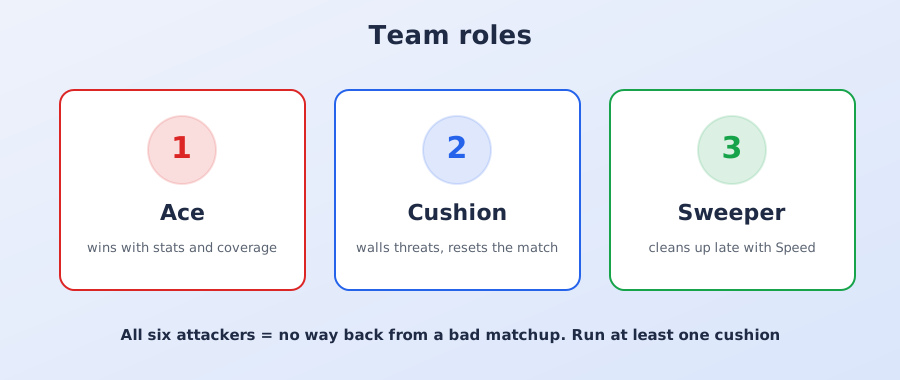
Three basic roles
- Ace (attacker): your main damage dealer, defined by stats and move coverage. Pokémon near the top of the Attack/Sp. Atk rankings, or your Mega Evolution slot, usually fill this role.
- Cushion (wall/pivot): takes the hits your ace is weak to (ideally at half damage or less) and switches in to reset the match. Pick these based on typing and bulk.
- Sweeper: cleans up a weakened opponent late-game by outspeeding them. Look at the top of the speed tier list, or Pokémon with access to priority moves.
If all six of your Pokémon are attackers, you have no way to recover once you're put into an unfavorable matchup. We recommend including at least one cushion.
Removing "shared weaknesses"
The most common way teams fall apart is having the same type of move threaten multiple team members at once (a "shared weakness"). If 4 of your 6 Pokémon are weak to Ground, a single Earthquake can wipe out most of your team.
You don't have to check this by eye — a team diagnostic tool that flags shared weaknesses automatically is available on the Japanese version of the site. In the meantime, manually cross-reference each Pokémon's type page and try swapping in 1–2 Pokémon that resist your team's most common weakness.
Check your offensive coverage too
Balance isn't just about defense — offensive coverage matters as much. If your attacking moves only cover three types total, you'll be stuck against anything that resists all three. Look for gaps in your coverage and fill them in with secondary attacking moves.
Final step: check against the threats you'll actually face
Once your team is built, check its matchups against Pokémon you'll commonly run into (Mega Evolutions, Pokémon high on the base stat total rankings). If you find "the one Pokémon I just can't beat," look at its counter page and consider adding one of those counters as your sixth slot — repeating this process is how teams get stronger.