Learning Type Matchups — An Efficient Way to Memorize All 18 Types
You don't need to memorize all 324 combinations. Learn which of your attacks hit super effectively, how dual typing multiplies, and common mistakes to avoid. (updated: 2026-07-22)
Start from "what my attacks hit super effectively"
You don't need to memorize all 18×18 = 324 combinations. What actually matters in battle is: does my attacking move hit the opponent for super effective (2x) damage? Start by learning, for the move types you actually use, which opponents you hit super effectively — that's enough to battle competently. You can check the full picture on our type chart, or look up any specific type on its own type page.
Three tricks to reduce what you need to memorize
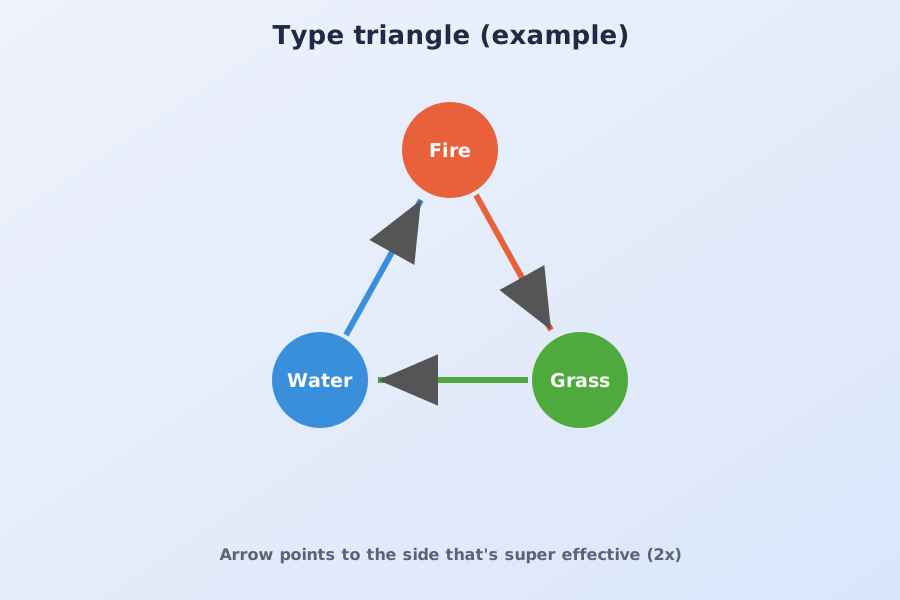
- Learn matchups in pairs: Fire↔Water, Grass↔Fire, Electric↔Ground, and other "rock-paper-scissors" triangles — learn one side and the other comes naturally.
- Prioritize immunities (0x) first: Ground→Flying (no effect), Normal/Fighting→Ghost (no effect), Electric→Ground (no effect), and so on. Immunities cause more disasters than "just" super effective hits, because your move does nothing at all.
- Learn the types your own team uses: deprioritize types you never touch. If you fully master the attacking types and weaknesses of your own six Pokémon, you've covered about 80% of real matches.
How dual typing multiplies
For a Pokémon with two types, effectiveness is multiplicative. For example, an Ice-type move against a Flying/Ground Pokémon is 2x against Flying and 2x against Ground, for a total of 4x. The reverse can also happen — two types cancelling each other out to neutral or resisted damage.
You don't need to calculate this by hand every time. Each Pokémon's page lists a "Type matchups (defense)" table with 4x/2x/resisted/immune already worked out. Any 4x weaknesses also show up first on our counter pages.
Common misconceptions
- Offensive and defensive type matchups are separate things: "Steel has few weaknesses" (a defensive strength) and "Steel-type moves hit hard" (an offensive claim) are two different statements.
- Don't forget same-type attack bonus (STAB): a move that shares a type with the user deals 1.5x damage. Even at neutral effectiveness, a STAB move can out-damage a "super effective" move of another type.
- Abilities can change the rules: Levitate (Ground immunity) and similar abilities create exceptions that don't show up on the type chart at all. Always check the opponent's ability too.
Whenever a matchup feels uncertain, plug the actual move into the damage calculator — it will tell you the effectiveness and the hit count. Don't rely on memory alone; use the tool alongside it.