
Weather Teams 101 — Building & Playing Sun, Rain, Sand, and Snow
The basics of building a team around weather. What each weather effect does, how to pair a setter with your ace, and how to fight back against one. (updated: 2026-07-22)
What is a weather team?
A weather team sets up a field-wide weather effect (harsh sunlight, rain, sandstorm, or snow) and fills the roster with Pokémon that benefit from it. Since the boost applies to your whole team for as long as the weather lasts, a well-run weather team can dominate a match. Weather-extending items are found among the general-purpose held items.
What each weather effect does
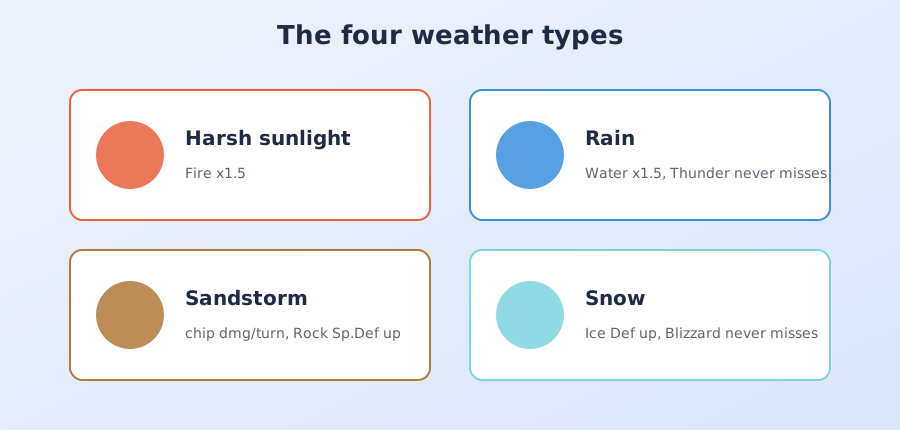
- Harsh sunlight: Fire moves ×1.5, Water moves ×0.5. Solar Beam fires without a charge turn. Pairs perfectly with a Drought-style setter.
- Rain: Water moves ×1.5, Fire moves ×0.5. Thunder becomes unable to miss. Pairs with a fast Water-type attacker.
- Sandstorm: chip damage every turn to anything that isn't Rock, Ground, or Steel. Rock-types get a 1.5x Sp. Def boost. Useful both for chip damage and for boosting a wall.
- Snow: Ice-types get a 1.5x Defense boost. Blizzard becomes unable to miss. Suits a more defensive-leaning build.
The basic structure: setter + ace + extension
- Setter: a Pokémon that uses a weather-setting move, or has an ability that sets the weather automatically on switch-in (like Drought or Drizzle). An ability-based setter is far more consistent and low-effort.
- Weather ace: your main attacker that gets a power or accuracy boost from that weather — Fire under sun, Water under rain, and so on. This is where your damage output comes from.
- Weather-extending item: if you're setting weather with a move rather than an ability, an extension item (one exists for each weather type) stretches out how many turns it lasts.
Weaknesses of a weather team
For all their power, weather teams have clear weaknesses. Keep these in mind when building:
- Weather can be overwritten: if the opponent sets their own weather, yours disappears. Whether you can bring your setter back out again becomes the deciding factor in a weather war.
- Over-reliance on the setter: if your setter goes down, your team's whole strength can evaporate with it. Give the setter some bulk of its own, or bring more than one way to set weather.
- Weakness once the weather runs out: even with extension items, weather eventually ends. Carrying a sub-plan or two that works without weather makes the team much harder to crack.
Playing against an opposing weather team
If the opponent is running a weather team, taking down their setter quickly is usually the best plan. Check their ace's counter page for favorable picks, or consider setting your own weather to overwrite and neutralize theirs. For overall team balance, see team building basics.