
How to Use Stat-Boosting Moves — Sweeping With Swords Dance & Dragon Dance
The main stat-boosting moves, when to set them up, how to create a safe setup opportunity, and how to play against a boosted sweeper. (updated: 2026-07-22)
What are stat-boosting moves?
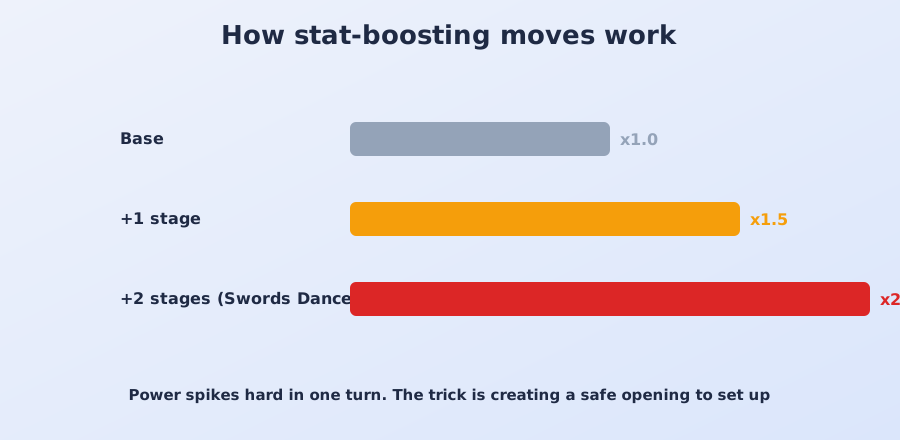
Stat-boosting moves raise your own Attack, Speed, Defense, or other stats by 1–2 stages. You spend a turn using them, but your performance afterward jumps sharply — pull one off successfully and a single Pokémon can potentially sweep an entire team. It's a high-risk, high-reward playstyle.
Common stat-boosting moves
- Swords Dance: +2 Attack. Pushes a physical attacker's power straight into guaranteed-KO range.
- Dragon Dance: +1 Attack and +1 Speed. A versatile boost that patches both power and Speed at once.
- Shell Smash: +2 Attack, Sp. Atk, and Speed, at the cost of −1 Defense and Sp. Def. Devastating if it goes off, but fragile afterward.
- Nasty Plot: +2 Sp. Atk. The special attacker's equivalent of Swords Dance.
- Iron Defense and similar: defensive boosts. Used to build bulk and create setup opportunities on the defensive side.
When to set up — creating your opening
Whether a stat-boosting move pays off comes down to "can I safely get one free turn?" Here's how to create that moment:
- When the opponent looks likely to switch out of a favorable matchup: if you predict they'll pull back, setting up costs you nothing.
- After shutting the opponent down: use paralysis or sleep (see status conditions) to freeze the opponent in place, then set up.
- In front of something you can comfortably tank: if you can shrug off the opponent's best hit, you can set up while taking the attack.
Speed and setup moves
Moves like Dragon Dance or Shell Smash that also raise Speed are powerful because "the turn after you set up, you're already moving first." Just remember you're still slow before that first boost, so check with the damage calculator that you won't be knocked out before you even get to set up. Stat-boosting moves that don't touch Speed (like Swords Dance) are safest on Pokémon that are already fast, or after paralyzing the opponent first.
How to play against a setup sweeper
If the opponent is the one setting up, here's what to keep in your back pocket:
- Taunt: shuts down status moves entirely, making setup impossible.
- Ignore the stat changes: survive with a Focus Sash, then chip away with a priority move that ignores the new stat boosts.
- Forced switches / phazing moves: force the boosted Pokémon out and its stat changes reset.
- Status conditions: burn cripples a physical sweeper's power, paralysis cripples its new Speed.
A setup-oriented team is far more stable if the whole roster is built to create these openings together. See team building basics for how to structure that.