Switching Fundamentals — When to Pull Back and How to Read the Mind Games
Switching is a tactic, not running away. When to pull back, how the switch mind game works, and how to punish an opponent's switch. (updated: 2026-07-22)
Switching is a tactic
Newer players tend to treat switching as "running away," so they push through unfavorable matchups and lose. In reality, rebuilding a favorable matchup by switching is the core of competitive play. Not getting attached to the Pokémon currently on the field, and instead fighting for the advantage across the whole board — that's the basic strategy of Pokémon battling.
When to pull back
- A clearly unfavorable matchup: the opponent is faster and their move gets a better hit count against you than yours does against them (see reading damage calculations). Don't force the attack — switch to something favorable instead.
- The opponent looks ready to set up: before you become a free setup opportunity, switch to something that denies the setup.
- You're about to eat a status condition: before your ace gets shut down by paralysis or burn, switch in something that resists or ignores that status.
The switch mind game
Switching always comes with a layer of mind games. The basic patterns are:
- Predict the opponent's switch and attack accordingly: guess where they're switching to and use a move that punishes that specific target. Land it and you gain a huge advantage.
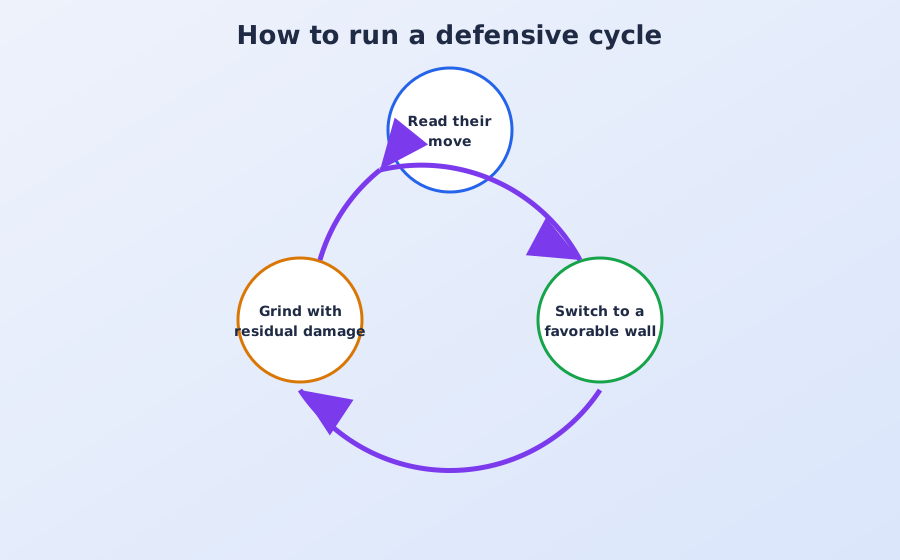
- Predict the opponent's attack and switch accordingly: bring in something that resists or is immune to the incoming move, earning yourself a free turn (see defensive cycling).
- Use Protect to gather information: if you're not confident in your read, Protect lets you see what the opponent does before committing.
Your reads won't always land. The trick is picking "safe reads" that don't cost you the game even when they're wrong.
How to punish a switch
Know how to punish the opponent's switches too:
- U-turn / Volt Switch: deal damage while switching out yourself. See what the opponent switches into, then bring in whichever of your Pokémon is favorable against it.
- Pursuit-style moves: deal heavy damage to a fleeing target. Devastating if you correctly read the switch.
- Hazards: entry hazards chip the opponent every time they switch in, adding up heavily over a long, cyclical match.
Build your team around switching
To make full use of switching, your team needs clearly divided roles. If your physical wall, special wall, and ace all complement each other, you'll always have a good switch-in ready for whatever comes. This kind of design is covered in team building basics and team selection. Reading switches only pays off once the underlying team is built well.